
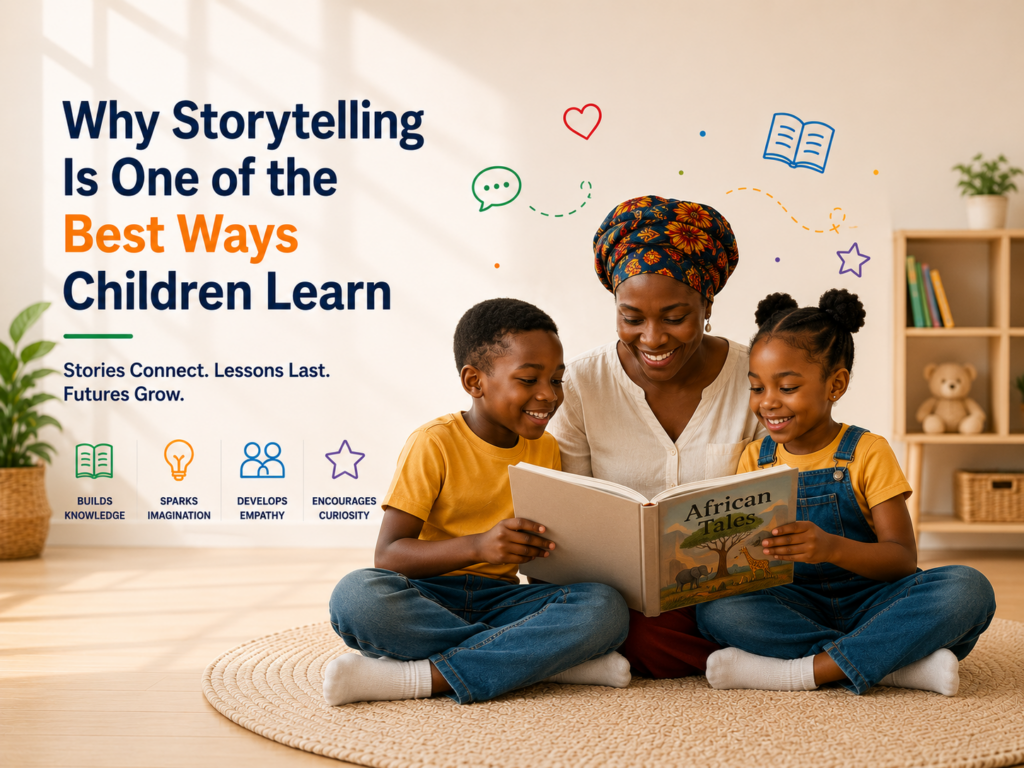
📖 Introduction
Storytelling is one of the oldest and most effective ways to teach children.
Stories help children understand new ideas, remember lessons and build important life skills. They also improve language, creativity, empathy, confidence and critical thinking.
For generations, parents, grandparents and teachers have used stories to teach values like kindness, courage, honesty and perseverance.
Across Nigeria and Africa, stories have always been more than entertainment—it’s a powerful way to educate, preserve culture and connect communities.
🌟 Why Does Storytelling Capture Children’s Attention?
Have you ever noticed a child asking to hear the same story again and again?
Children enjoy repetition because each retelling helps them discover new details, understand characters better and strengthen their memory.
Stories naturally capture children’s attention because they include:
- Memorable characters
- Interesting challenges
- Emotions they understand
- Surprises that spark curiosity
- Satisfying endings with meaningful lessons
When children connect emotionally with a story, learning becomes easier and more enjoyable.
📚 How Storytelling Helps Children Learn
1. Builds Language Skills
Stories introduce children to new words, sentence patterns and ways of expressing ideas.
Regular storytelling strengthens vocabulary, listening skills and communication.
2. Encourages Imagination
Stories inspire children to picture people, places and adventures in their minds.
This develops creativity, problem-solving and innovative thinking.
3. Builds Emotional Intelligence
Stories help children understand their own feelings and the emotions of others.
They learn valuable qualities such as empathy, resilience, courage and forgiveness by following characters through different experiences.
4. Teaches Positive values
Stories allow children to discover lessons naturally through a character’s choices and actions.
Values such as honesty, kindness, teamwork and perseverance become easier to understand and remember.
5. Improves memory
People often remember stories better than isolated facts.
Characters, emotions and events create stronger mental connections, making information easier to recall.
6. Develops critical thinking
Stories encourage children to think deeply by asking questions such as:
- Why did the character make that choice?
- What would they have done differently?
- What is likely to happen next?
These conversations help children analyze situations and develop independent thinking.
🌍 The Value of African Stories
Africa has one of the world’s richest storytelling traditions.
Folktales, proverbs, songs and oral histories have helped generations of children learn about important values such as:
- Courage and Resilience
- Respect
- Community
- Responsibility
- Wisdom and;
- Perseverance
🏡 Storytelling in Everyday Learning
Storytelling doesn’t have to be complicated.
Parents and caregivers can make stories part of everyday life by:
- Reading together before bedtime
- Sharing stories during family time
- Acting out favorite scenes
Teachers can also use storytelling to make lessons more engaging.
For example:
- History becomes easier to remember through personal stories.
- Science concepts become more relatable with imaginative examples.
- Math problems feel more meaningful when presented as stories.
- Language lessons become more enjoyable through storytelling activities.
🎬 How Branama TV Brings Stories to Life
Storytelling is at the heart of Branama TV. Our stories are designed to – encourage creativity, celebrate African culture, teach positive values, spark curiosity, and build confidence in kids all around.
We believe stories should do more than entertain—they should help children discover who they are and who they can become.
Whether you’re a parent, teacher, caregiver or young learner, there’s always something new to discover with Branama TV.
You can also watch us on our YouTube channel, visit our website, or tune in on cable TV; Free TV and Startimes Channel 135.
📌 Key Takeaways
- Storytelling is one of the most effective ways children learn.
- Stories improve language, creativity, memory and emotional intelligence.
- African storytelling traditions help children connect with their culture and values.
- Parents and teachers can use storytelling every day to make learning more engaging.
- Branama TV uses storytelling to inspire curiosity, creativity and lifelong learning.
❓Frequently Asked Questions
Why is storytelling important for children?
Stories helps children develop language, imagination, memory, creativity, confidence and emotional intelligence while making learning fun and meaningful.
At what age should kids start engaging with stories?
Children benefit from storytelling from infancy. As they grow, stories can become more interactive and age-appropriate.
Does storytelling improve cognitive performance?
Yes. Stories strengthen listening, comprehension, vocabulary, communication and critical thinking—skills that support success in the classroom.
Are African Folktales still relevant today?
Absolutely. African stories continue to teach timeless lessons about character, resilience, community and cultural identity while helping children stay connected to their heritage.
Can storytelling reduce screen time for kids?
Yes. Reading aloud, telling family stories and interactive storytelling sessions provide engaging alternatives to passive screen time while encouraging imagination and family bonding.
BRANAMA TV
